Mold From a Roof Leak: What to Check and When to Worry
How fast mold grows after a roof leak in Florida, the signs, what to remove, and when to call a professional.
Written by the Valrico Roofing Pros team, 2700 St Anthony Dr, Valrico, FL 33594 · Updated October 31, 2026
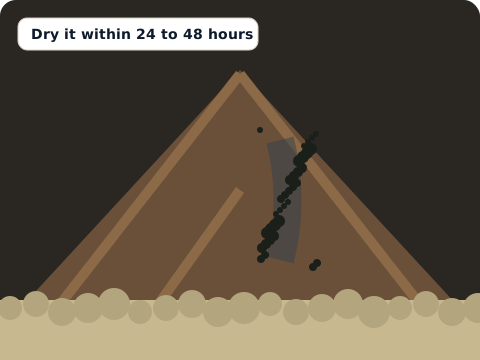
Mold from a roof leak starts when drywall, insulation or roof decking stays wet. EPA guidance is to dry wet materials within 24 to 48 hours; after that, mold can grow, especially in Florida humidity. Fix the leak, dry the area fast, replace soaked insulation and drywall, and call a professional for mold over about 10 square feet. Stopping the water is step one, which is where roof leak repair comes in.
Signs of mold from a roof leak
- A musty smell in a room or the attic
- Dark spots on the ceiling around a stain, or on the underside of the roof deck
- Wet, matted or discolored insulation
- A stain that keeps coming back after painting
What to do, in order
- Stop the water.Tarp or repair the roof. See emergency roof leak repair.
- Dry it fast.Fans and a dehumidifier, within 24 to 48 hours (EPA guidance).
- Remove what's soaked.Wet insulation and soft or crumbling drywall come out.
- Check the decking.Dark, soft or delaminated plywood needs replacing. See rotted deck repair.
- Clean or call in help.Small areas under about 10 sq ft can usually be cleaned with protection; larger areas need a mold professional.
Why Florida makes it worse
High humidity means wet materials dry slowly, and hot attics speed up growth. A slow leak that drips for a whole rainy season can rot decking and grow mold over a large area before a ceiling stain even appears. That's why a stain that grows should be checked straight away: see water stain on ceiling.
Insurance and mold
Many Florida policies cap mold coverage. Damage dealt with quickly after a sudden leak is easier to claim than mold from a long-term one. See roof leak insurance claim, step by step. The best defense against mold from a roof leak is fixing the leak fast.
Mold questions
How fast can mold grow after a roof leak?
EPA guidance is to dry wet materials within 24 to 48 hours; after that, mold can start growing on damp drywall, insulation and wood.
Can I clean mold myself?
EPA guidance suggests homeowners can usually handle small areas, under about 10 square feet, with gloves, eye protection and an N-95 mask. Larger areas call for a professional.
Does wet insulation need replacing?
Usually, yes. Soaked fiberglass or cellulose insulation loses its value and holds moisture against the drywall.
Is attic mold always from a roof leak?
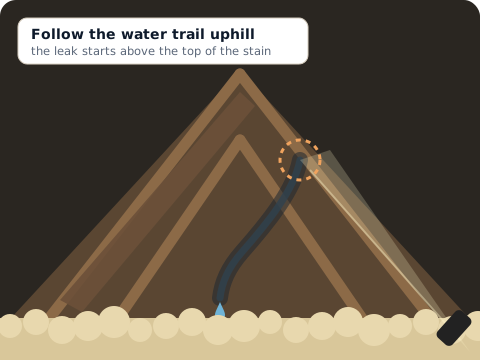
No. Poor attic ventilation and bathroom fans venting into the attic also cause it. Leak mold is usually concentrated around a water trail.
Will insurance cover mold?
Many Florida policies limit mold coverage. Sudden leak damage that's dealt with quickly is more likely to be covered than mold from a leak left for months.
Stop the water first. Call us.
Call (813) 555-0147 or text us a photo of the stain. We’ll find where the water is getting in, show you photos, and explain the repair before any work starts.